Wednesday, December 19, 2012

The End is (Not) Nigh

Since the media in general has decided to not give the facts about what is happening with the Mayan calendar in a couple days, I figured I better take care of it for them. I'll start with this: there is no evidence of either a Planet Nibiru or Planet X on a collision course with Earth. These are purely fictional and I will not even mention them again.

Second, there is no prophecy concerning December 21, 2012. December 21 is simply, based on a common interpretation, the end of an "era" on the Mayan long count calendar. This is the date which is the end of the last "bak'tun" (a measure of 144,000 days) which was recorded by the Mayans. This means about the same thing as New Years Day. Which is to say, practically nothing. What's more, the end of this bak'tun may signify even less since bak'tuns are likely not the highest unit of time the Mayans used. Just like a millennium is a large unit of time, but not the largest by far. The idea that this lack of recorded dates in the future could signify the end of time is like saying that because my computer won't show me dates past December 31, 2037 that must be when the world will end.

The fact that so many people have latched onto this hoax and almost nobody is reporting on it responsibly is disturbing. The very concept that any calamity could be linked to a calendar with an arbitrary start date is mind-numbingly simple to discard, and yet so many people believe it could be the case. If you plan to use it for an excuse to have a great party, that's fine. Just don't spend all your money on hookers and blow. You will need it for your January rent.

Tuesday, December 4, 2012

Oliver Stone's Untold History of the United States: Episodes 1-3

Let's make one thing clear first: I applaud Mr. Stone and his team for taking on the task of telling history from a viewpoint rarely seen in text books or any other form of media. This is something that should be done as often as possible from as many views as possible, because the truth is that no single viewpoint can tell us everything about history. For instance, I knew next to nothing about Vice President Henry Wallace before watching the first three episodes of this series. Now I do.

The first three episodes seem to lean toward a fondness for progressive politics. The almost loving way that Wallace is sketched (here is a less loving look) would lead to this conclusion just based on his run for president with the Progressive Party. However, the portrait of Wallace has left out some very important later-life revelations. Maybe they will come out later in the series, but just in case they don't I'll tell you about them here. Wallace is portrayed completely as a pro-Soviet communist sympathizer. He's characterized as a hero for being a part of our government and pro-communist at the same time. In reality, he bought into the propaganda machine that made Joseph Stalin seem like less of a monster than he was, and 70 years later Mr. Stone has joined him. Later in Wallace's life he wrote a book called Where I Was Wrong that detailed how he was duped into thinking more positively of Stalin and the communist system than he should have.

Stone portrays Soviet life the way that Wallace thought it was thanks to false information. The problem is we know better now. Or, at least, we all should. The idea that Soviet Russia was much the same as the United States is a fallacy built on propaganda. Mutual propaganda, but propaganda nonetheless. During World War II Russia was our ally and we treated them accordingly. We like to believe that our allies are good people. Sometimes, including Russia under Stalin, they are not. A simple read through of Russian history by any of the researchers on the show would have told them that portraying Stalin's regime as anything less than a tragedy for the Russian people is irresponsible.

Downplaying U.S. involvement in the Allied victories in both Europe and Asia is an interesting angle. If you rely on the information in this show, then you probably believe that England and the United States did practically nothing to fight the Germans until we landed in Normandy, leaving the U.S.S.R. to fight them alone. That's more bad history along side ignorance of how war is fought and won. American and British forces were bombing Western Germany within months after the U.S. entered the war in Europe. The American's first took weakly defended Northern Africa back from the Axis to make it possible to move into Italy and then on to France and Germany. If you've ever played Axis and Allies, you know this is a good tactic if you are on the Allied side. Getting a foothold was an important part of war then (it still is but to a lesser degree with our long range capabilities), and they didn't have the ability to gain that foothold before regaining Africa and then taking Sicily.

As for the victory over Japan, the main argument is that we didn't have any reason to drop the atomic bombs on Hiroshima and Nagasaki other than a show of force to scare the Soviets. This is a topic that is still split, even amongst credible historians. The number of lives that would have been lost during an invasion would most likely have outstripped those lost in the two cities due to the use of atomic bombs, not by the huge numbers that many want you to believe though. And the cities were going to be firebombed anyway. (Plus, without the use of the bombs any forthcoming episodes about the Cold War may not exist.) However, unleashing this powerful weapon on the world will now always be a black mark on the United States, and Japanese surrender was eminent anyway with the rest of the Axis defeated and Russian forces joining the fight against them.

I can't begin to understand why something purporting to be history would make Stalin, a man who killed millions of his own people, seem like a misunderstood hero. It's flat out false. Although, if this plays out the way I think it will, the earlier episodes will set the stage for the idea that socialism is the way that the United States needs to go and that progress toward that has been thwarted by the evils of Reagan, Bush, and a crazy document called the Constitution. I can't wait to see what bad history episode 4 brings.


Brian William Waddell is a foodie, beer geek, and author. His numerous blog posts range from food to politics. He also has a book of poetry, Fractured Prose, available here, and is ready to publish his second poetic endeavor.

Saturday, November 10, 2012

Seal Team Six: A Fiction Presented as Fact


The following is an expanded re-edit of an article coming out on RR.com/politics tomorrow. But, it also fits on this site, so I'll put it here. "Fact Checking" is a slippery term when dealing with widely classified information. However, given that I have the same information available to me as did the filmmakers, I think it is fair to hold them to the facts as they are understood at this point.


In the early hours of May 1, 2011, a small group of American soldiers raided a compound in Abbotabad, Pakistan. The raid ended the life of Al Qaeda leader, Osama bin Laden. The movie that recently aired on the National Geographic network, Seal Team Six: The Raid on Osama bin Laden, is an excellent example of good movie making. It's an intense piece of film, but it is also an excellent example of ignoring the facts in order to create drama.

In the end, the reality is our soldiers took out one of the biggest murderers in the history of the world. There should be a monument to their effort. However, this particular movie is not the monument the men deserve. A dramatic interpretation of events, while enjoyable and entertaining, is not history. When the facts surrounding the raid are fully declassified maybe we can find a filmmaker willing to do the event justice, but for now, the slapped-together version based on hearsay and unconfirmed reports is apparently the best we can do (we'll see if the big screen interpretation coming out in December does a better job).

Many conservatives are angry that President Barack Obama's decision to go ahead with the raid is sensationalized in the film. I am not sure how sensationalized it is. The decision to go in on foot, rather than bombing the compound, does seem like a more politically driven choice based on the timing of when the identity of the target was actually revealed in real life, rather than in the film. According to reports, Seal Team Six knew from day one of their training for the mission that they were going after bin Laden. The movie makes it seem like it was a last minute revelation. While it is clear that the intelligence community wasn't 100% certain it was bin Laden in the compound, reports also make it clear that the certainty was much higher than the film alludes to.

The decision to raid the compound was an important one, but the idea that we needed to have proof of bin Laden's death was what drove it, not military strategy. The film alludes to this concept in conversations amongst members of the CIA. There are a number of apparent factual errors in the film, such as the manner in which bin Laden is actually killed. By a couple accounts, it seems that bin Laden poked his head out the open door of the room he was in and was hit. He wasn't standing wide open in the doorway with a gun in his hand. In fact, reports claim he was unarmed.

The helmet cams with a satellite uplink that are used during the raid are a pure flight of fancy (although a smart visual device which the director used well), Also, according to the Obama administration, the movie gets the directive in regards to capture wrong. The film states they "prefer no detainees," but the administration, along with other reports, claim that capture was definitely an option. While the film claims that then Secretary of Defense Robert Gates was against the raid, his true views were in line with one of the CIA guys who favored bombing. Certainly this is a question of nuance.

This event should be immortalized. Not politicized. In this film, the focus is definitely on the soldiers, where it should be. And, no matter how you view the sideshow of the actual decision to perform the raid, it is just that, a sideshow. The film is entertaining and interesting to watch. But, just as with all works of art, the purported facts should be taken with a grain of salt. That said, this one does a decent job of presenting the scenario without an overwhelming bias.

Brian William Waddell is a foodie, beer geek, and author. His numerous blog posts range from food to politics. He also has a book of poetry, Fractured Prose, available here, and is ready to publish his second poetic endeavor.

Thursday, August 30, 2012

Episode 10: The Greater Fool


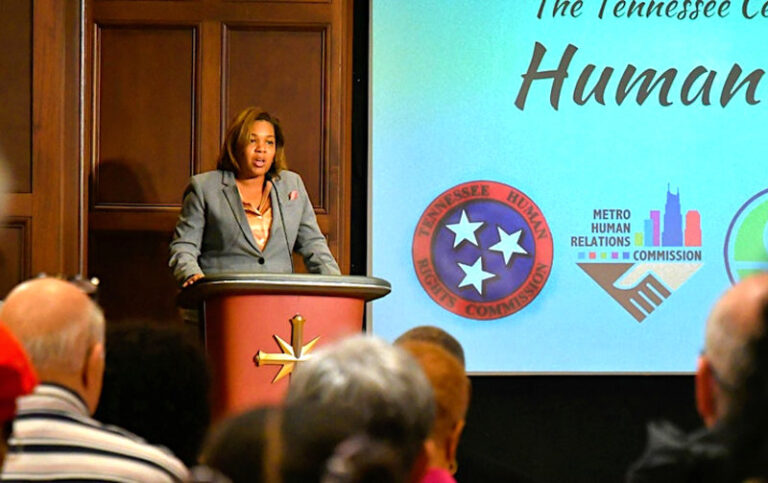
Just as the final News Night we will see this season began, so shall I, with Dorothy Cooper. Dorothy Cooper is a real person who resides in Chattanooga, Tennessee. And, that was her real picture, and she was written about in the Chattanooga Times Free Press (note the date of the article, October 5th, the timing is explained away by the nurse being the source) when she was unable to obtain the free voter I.D. that Tennessee provides. Yes, I said free. She tried to get the free I.D. in early October of last year, but because of having a different last name than what is on her birth certificate she initially ran into a bit of a glitch. She still could have voted absentee with no issues. However, after returning with her marriage certificate later that month, she received her voter I.D., well in advance of Tennessee's March 6th, 2012 primary, and was able to vote without issue. I'm pretty sure they picked the wrong example. Plus, in my research, I didn't find a single state whose voter I.D. law did not allow for either a free voter I.D., the ability to simply sign an affidavit to attest to your identity, or to have access to an absentee ballot.

The rest of the information thrown at us, and there is a ton of it this time, is quick hitting and meant to smash the Tea Party, and possibly Republicans as a whole, hard. The show used some quotes that were apparently meant to show that Tea Partiers hated Americans. Most of this is rhetoric that is meant to excite the Republican base against our current president or the Democrats as a whole. It's normal for both sides to do this with regards to the opposing party. It's fine to point it out, but as proof that the Tea Party hates Americans it is weak. Grover Norquist's quote is about shrinking our government, which is an ideological tenet of the right, not about hating Americans or the American government. Senator Mitch McConnell from Kentucky gets a good amount of face time in this show. His statement that the Republican goal should be to ensure that President Obama is a single term president is fairly par for the course for the party who doesn't have a sitting president. He also says a little more in a slightly longer cut of the video. It's all good drama, and they are real quotes that are kept in context.

When we get to the concept of the Tea Party constantly claiming that the United States was founded as a Christian nation, the quotes they choose are a little more suspect. First, I would like to address the use of the quotes of our Founding Fathers. The quote attributed to John Adams from the Treaty of Tripoli is used out of context and somewhat misattributed. The original treaty was written in Arabic and translated by Joel Barlow, the U.S. emissary to the Barbary States. John Adams signed it when it was brought back to the United States, but they were not his words (although the words of the document signed are legally attributed to those who sign). The whole of Article XI of the treaty is as follows:

As the government of the United States of America is not in any sense founded on the Christian Religion,-as it has in itself no character of enmity against the laws, religion or tranquility of Musselmen[Muslim],-and as the said States never have entered into any war or act of hostility against any Mehomitan [Muslim] nation, it is declared by the parties that no pretext arising from religious opinions shall ever produce an interruption of the harmony existing between the two countries.

You can also read the whole text of the treaty here.

Second, and even more interesting in its ability to work against their point under scrutiny, is the use of the Thomas Jefferson quote. The quote they use is from the Virginia Statute for Religious Freedom that Jefferson wrote in 1777. The statute is one of the three accomplishments, alongside writing the Declaration of Independence and founding the University of Virginia, that Jefferson wanted in his epitaph. The whole line reads as follows, "That our civil rights have no dependence on our religious opinions any more than our opinions in physics or geometry," and is a part of a document that actually finds a very Christian defense for the separation of church and state. Don't believe me? Just read the first three words (but preferably the whole) of the statute here.

The comment by John McCain is also taken out of context. In the clip they show, he is answering the question, "Most Americans believe the Constitution established a Christian nation. Do you agree?" His answer is initially, "I would probably have to say, yes, that the Constitution established the United States as a Christian nation." But, he goes on, "But I say that, again, in the broadest sense. The lady that holds her lamp beside the golden door doesn't say, 'I only welcome Christians,' okay. We welcome the poor, the tired, the huddled masses. But when they come here they know they are in a country founded on Christian principles." The rest of this part of the interview, done for a Christian website, can be found here.

Finally, I feel I must address a truly egregious error on the part of this show. Name-calling is one thing. Calling the Tea Party members Republicans In Name Only is fair and has a basis in reality. When you call any group not involved in genocide, terrorism, and human trafficking the "American Taliban" you have crossed the line.  The list he showed before he made the statement does not support this assertion nearly well enough once you really get into what the Taliban is and does throughout the Middle East. I couldn't care less about what the Tea Party movement really stands for, but this is not an acceptable thing to call any group that I know of with any real following in this country today.

With all the quotes in the episode, I feel I should leave you with one final quote that I feel was the best of the season:
                       
 Pussy-ass coward-ass pussified pussies. – Charlie Skinner

Brian William Waddell is a foodie, beer geek, and author. His numerous blog posts range from food to politics. He also has a book of poetry, Fractured Prose, available here, and is ready to publish his second poetic endeavor.